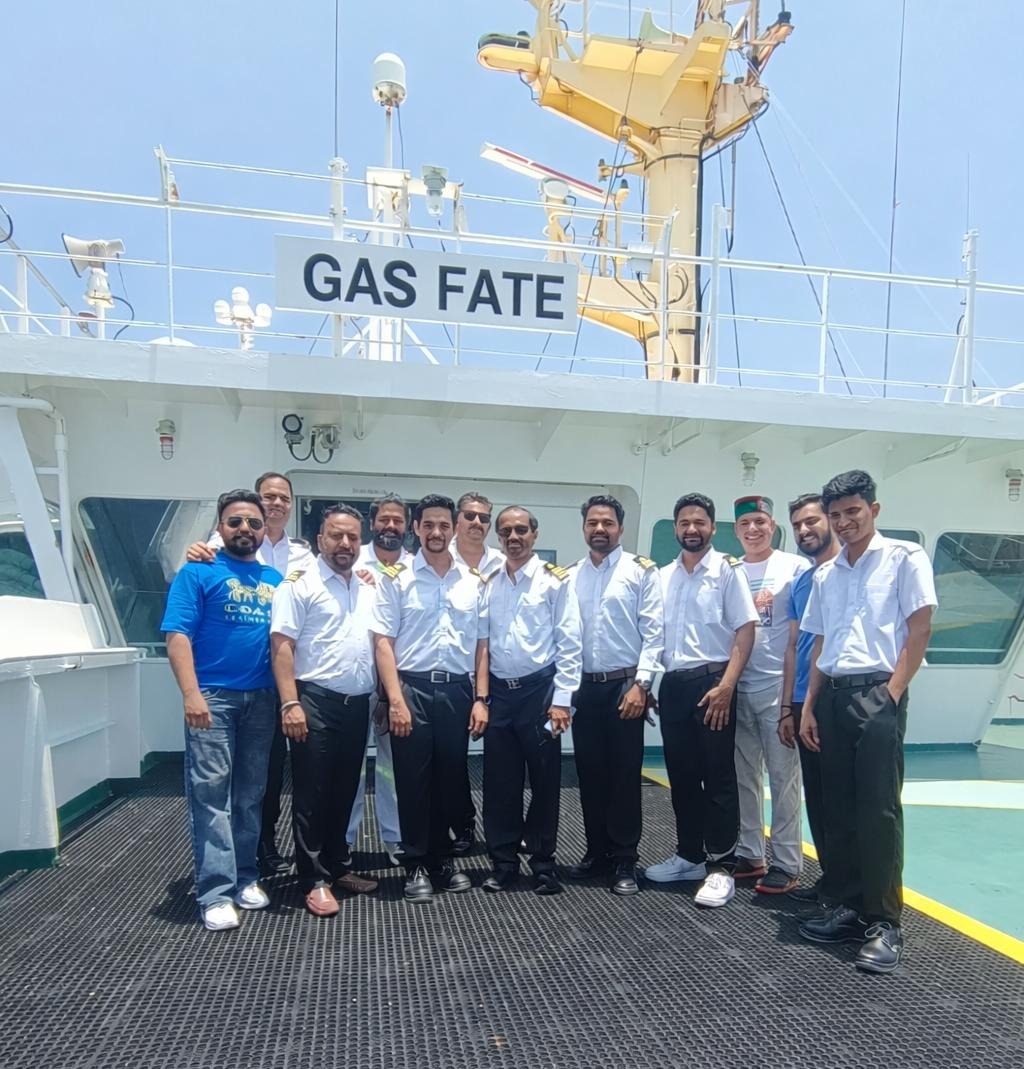
23 crew members including Chief Engineer Manoj Patil and Electrical Tech Officer Ratnadeep Paithankar from the merchant vessel GAS FATE have successfully navigated the highly volatile Strait of Hormuz amidst active regional warfare. Guarded and closely protected by Indian Naval ships and overhead choppers following high-level diplomatic clearances from the Iranian government, the crew braved harrowing conditions. During the transit, they witnessed burning and sinking ships, navigated under active missile fire, and survived near-misses to officially hand over their critical cargo of Anhydrous Ammonia to Indian officials on April 14.
Carrying a product fundamentally critical to India's agricultural framework and defense systems, Mr. Manoj Patil, Mr. Ratnadeep Paithankar and the crew operated under the driving national principle of "Jai Jawan, Jai Kisan" (Hail the Soldier, Hail the Farmer). The successful transit, however, immediately triggered US sanctions on the vessel, sparking intense diplomatic inquiries and adding immense pressure to an already perilous voyage.
Exclusive Q&A with Manoj Patil and Ratnadeep Paithankar:
Q: Mr. Manoj, what happened immediately after the vessel survived the dangerous transit through the Strait of Hormuz?
Manoj Patil: The physical danger was only one part of the ordeal. Because we transited the Strait of Hormuz during a period of intense conflict, we faced immediate US sanctions. This led to multiple, rigorous inquiries by US officials. Despite this immense diplomatic pressure and the sheer exhaustion from the warzone, we maintained our course and safely reached India on the 13th of April, successfully handing this vital cargo directly over to Indian officials.
Q: Mr. Ratnadeep, as an Electrical Tech Engineer, what were your primary challenges during the active warfare?
Ratnadeep Paithankar: We have more than 1000 machines on the ship, and facing such dangerous situations it was really important to keep everything in function. The threat level was incredibly high. Our systems were actively targeted by communication jammers and potential hackers trying to disrupt our operations. I had to neutralize these threats through thorough risk assessments and continuous, grueling manual monitoring. When you are navigating through a warzone, lacking focus simply wasn't an option.
Q: Mr. Ratnadeep, how did the 23-member crew handle the extreme physical threats and pressure aboard the GAS FATE?
Ratnadeep Paithankar: Naturally, the crew was fearful because we are not regular combat fighters like defense personnel. We were navigating through active conflict, physically seeing burnt ships and sinking ships in the water around us. It was terrifying—missiles were travelling right over the top of our vessel, and we even had an incident where missile debris fell dangerously near to our ship. Knowing we were under the continuous protection of Indian Naval ships and choppers gave us critical reassurance. We are trained to be completely robust and emotionless when the time comes. Delivering this Anhydrous Ammonia for India's development—supporting the "Jai Jawan, Jai Kisan" spirit—was our absolute priority. We knew that any lapse in our operational focus would make the transit far riskier.
Q: Mr. Manoj, what is the reality of the Merchant Navy that the civilian population often misses?
Manoj Patil: The Merchant Navy is one of the most bizarre and demanding jobs in the world. Seafarers face a hell of a lot of trouble every month due to geopolitical conditions, wars, piracy, and extreme weather, but civilians are rarely aware of it. We are proud sailors who leave our families, our dreams, and our desires behind just to fulfill the betterment of our country. A quick fact: as per a 2024 Government of India survey, we are the largest source of foreign income for India, receiving over $10 billion USD annually. Yet, out of a population of 1.5 billion Indians, there are only about 10 lakh seafarers. Despite being the most valuable maritime professionals globally, we still face a severe shortage of sailors because it is so hard to find deserving candidates who can perfectly handle the intense scope of this job.