A thought-provoking literary work celebrates paternal love, the strength of family relationships, and the importance of mothers and fathers working together to shape the next generation.
BOOK ANNOUNCEMENT | INDIA
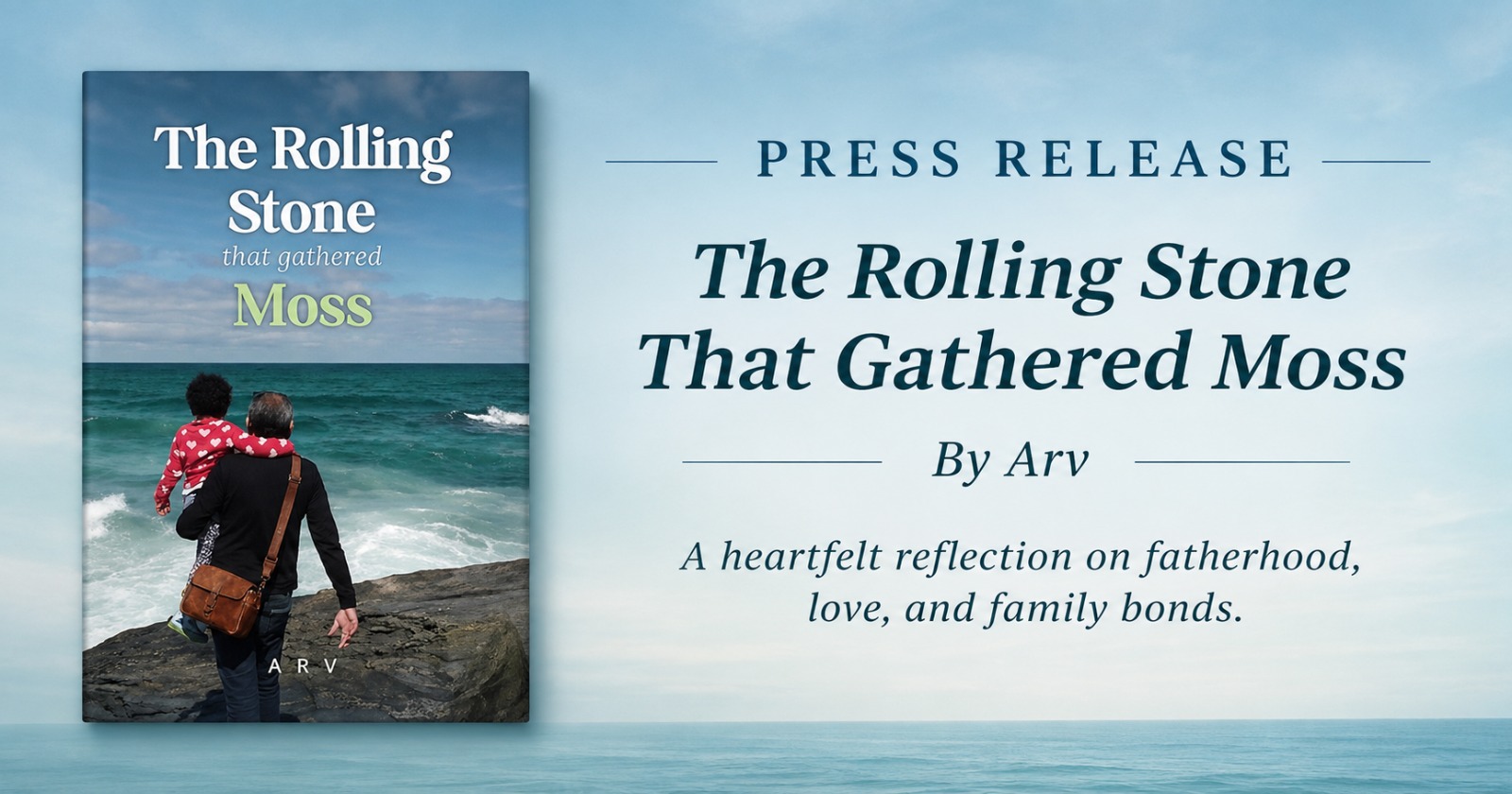
In a literary landscape where stories of family, sacrifice, and emotional relationships continue to resonate with readers, author Arv presents The Rolling Stone That Gathered Moss, a reflective work that brings attention to one of the most profound yet frequently underrepresented dimensions of family life: the emotional world of fathers.
Centered on the quiet, protective, and enduring nature of paternal love, the book seeks to give fathers a voice while highlighting their essential contribution to the emotional development of children. Its central message recognizes that fatherhood extends beyond fulfilling responsibilities or providing stability. It is also an experience shaped by affection, concern, emotional commitment, and the desire to create a secure foundation for the next generation.
The book addresses a familiar social reality: although fathers are often acknowledged for their ability to protect and provide, their emotional experiences may remain largely unspoken. Through its focus on paternal affection, Arv encourages readers to reconsider these traditional perceptions and recognize the depth of feeling that can exist behind everyday actions.
An important theme of The Rolling Stone That Gathered Moss is the value of cooperation between mothers and fathers. The book's description compares parenting to two hands joining in prayer or coming together in a warm embrace, emphasizing how different but equally significant contributions can work in harmony.
This imagery forms the foundation of the book's wider message about family unity.
Rather than presenting parental roles as competing responsibilities, the work celebrates the importance of shared commitment, mutual understanding, and emotional support. It encourages readers to recognize that a child's sense of belonging can be strengthened when caregivers approach their responsibilities with respect and cooperation.
The book's distinctive title also invites reflection.
The traditional expression describing a rolling stone suggests constant movement and the absence of permanent attachment. By introducing the unexpected image of a rolling stone gathering moss, Arv offers a symbolic opportunity to reconsider the relationship between personal growth and emotional rootedness.
Within the context of fatherhood, the title can be understood as a reflection on transformation. As individuals navigate changing responsibilities and life experiences, the relationships they develop may gradually become central to their identity and sense of purpose.
This perspective gives the book relevance beyond the experiences of fathers alone.
Adult children may find its themes useful in reconsidering the sacrifices and emotions of their parents. Mothers and fathers may discover opportunities for deeper conversations about partnership and shared responsibility. Younger readers may reflect on the relationships that have shaped their understanding of protection, affection, and commitment.
The subject also connects with wider conversations about emotional awareness within families. Traditional expectations sometimes encourage fathers to remain strong and composed while leaving limited room for expressing vulnerability. By emphasizing the profound nature of paternal love, the book highlights the importance of recognizing fathers as emotionally complex individuals.
At the same time, its message of parental harmony offers a positive perspective on cooperation, reminding readers that healthy family relationships are strengthened through communication, compassion, and continued involvement.
The Rolling Stone That Gathered Moss is positioned as a meaningful contribution to conversations about fatherhood, family values, intergenerational understanding, and emotional responsibility.
Its themes may particularly appeal to readers interested in reflective literature, parenting, relationships, and the evolving social understanding of fathers.
Through this work, Arv encourages an appreciation of the love that often exists quietly within families, asking readers to look beyond visible responsibilities and recognize the deeper emotional commitments that sustain them.
Ultimately, the book carries a message that is both personal and universal: strong family relationships are not built through responsibility alone, but through understanding, shared effort, and lasting emotional connection.
With The Rolling Stone That Gathered Moss, Arv brings renewed attention to the fathers whose love may remain unspoken but whose presence can have an enduring influence on the lives of their children.