GL Bajaj Educational Institutions represented itself at Zee News' "Ideas on Education" summit, where its CEO, Kartikay Agarwal, joined a panel of educators and industry leaders to discuss the theme "Degree Poori, Skill Adhuri," a phrase that translates loosely to a degree completed but a skill left unfinished. The panel examined why a growing number of graduates struggle to find employment despite holding formal qualifications, and what institutions must do to close that gap.
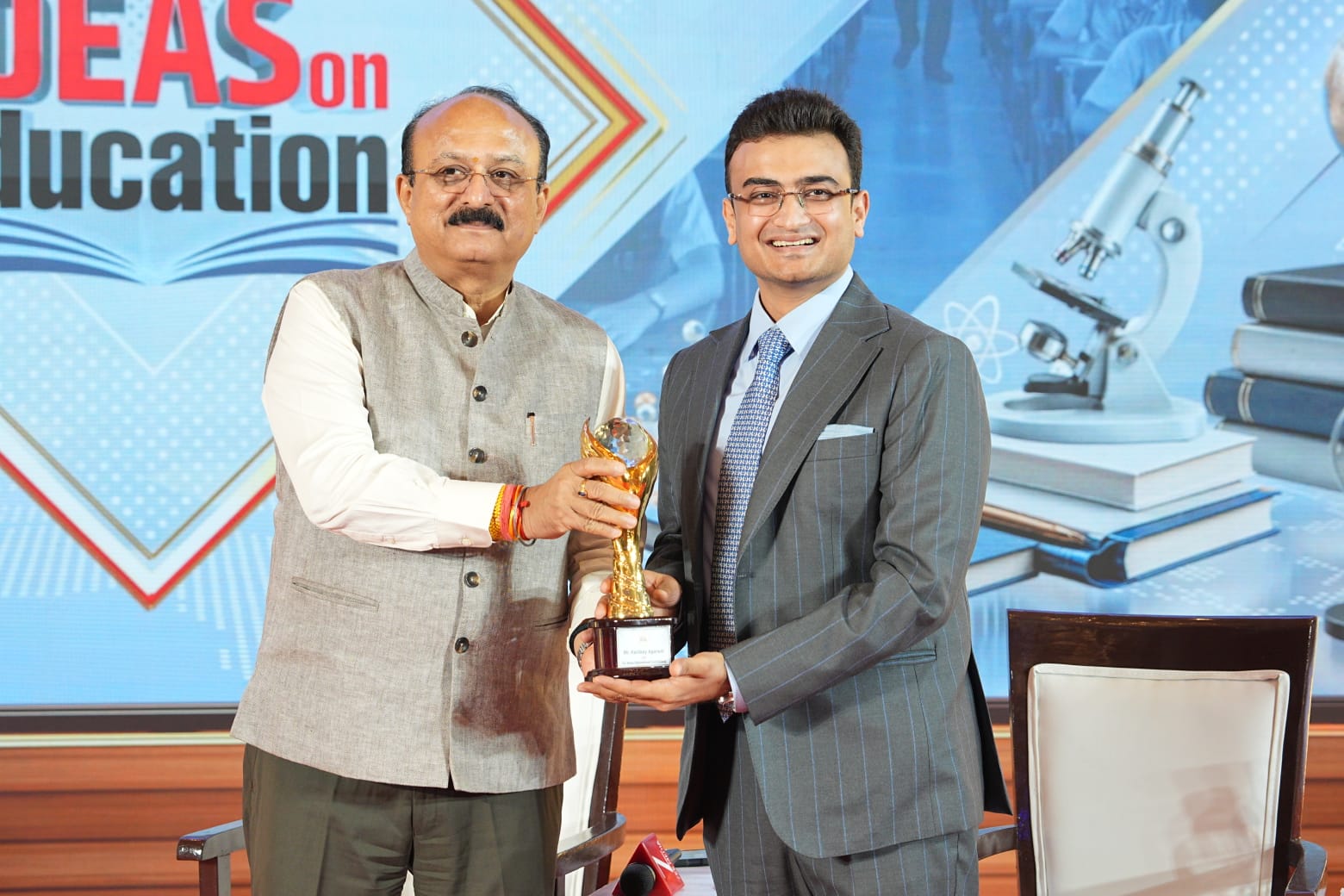
Agarwal's participation placed GL Bajaj, a multi-campus group based in Greater Noida and Mathura, among the voices shaping a national conversation on employability, research culture, and industry-ready graduates. During the summit, he was also felicitated by Delhi Education Minister Ashish Sood in recognition of the institution's contribution to higher education and skill development.
Rankings as an Outcome, Not a Goal
A central theme of Agarwal's remarks was his view that institutional rankings should follow from strong academic foundations rather than function as an end in themselves. He told the gathering that research culture, faculty quality, and industry alignment ultimately produce recognition, and that chasing rankings directly misses the point.
To illustrate this, Agarwal recounted an experience from earlier in his tenure. When GL Bajaj Institute of Technology and Management, widely known as GLBITM, saw its ranking improve, he received a wave of congratulatory calls. Yet the moment that stayed with him, he said, was different: a faculty member calling to tell him that a group of students had successfully published a research paper. For Agarwal, that call mattered more than any ranking notification, because it reflected the kind of academic culture the institution was trying to build from the ground up rather than a number arrived at from outside.
GLBITM's current standing lends weight to that philosophy. The institute holds an overall Diamond Rating from QS I-GAUGE and a Platinum Rating in Entrepreneurship, and its GL Bajaj Centre for Research and Incubation has supported more than 140 startups. Agarwal framed these achievements as evidence that the underlying work, not the pursuit of position on a table, is what produces durable results. He described a five-year vision in which GLBITM becomes known primarily for solving real-world problems through research and innovation, with NIRF rankings and similar recognitions arriving as a byproduct of that work rather than its purpose.
Bridging the Skill Gap Between Classroom and Career
Turning to the summit's central theme, Agarwal argued that academic degrees alone no longer guarantee employability in a job market that increasingly rewards demonstrated ability over credentials. Strong academic fundamentals remain necessary, he said, but they need to be paired with experiential learning that exposes students to real problems before they graduate. Project-based learning, live industry exposure, and structured mentorship, in his framing, are no longer optional additions to a curriculum but core requirements for producing industry-ready graduates.
He grounded this argument in a specific observation from his own campus. Walking past a traditional classroom one day, he noticed a professor teaching strictly from a textbook, with students visibly disengaged from the lecture. Moments later, in a laboratory nearby, he saw a markedly different scene: students working alongside an industry mentor to diagnose and fix a real system failure, fully absorbed in the task. The contrast between the two rooms, he said, crystallized something GL Bajaj had already begun to act on a redesign of its curriculum around project-based learning that keeps academic rigor intact while giving students far more contact with real-world problems.
Industry Partnerships Anchor the Curriculum
That redesign, Agarwal explained, rests heavily on partnerships with technology and consulting firms including Cisco, Palo Alto Networks, Capgemini, and AWS. These collaborations feed industry-designed curriculum modules and certifications directly into coursework, giving students hands-on training and exposure to current technologies rather than material that lags what employers actually use. The goal, he said, is to shrink the distance between what is taught in a classroom and what is expected on a first job.
Student Outcomes Reflect the Shift
Agarwal pointed to student performance in national competitions as an early signal that the approach is working. GL Bajaj students have participated in, and won, hackathons including the Smart India Hackathon, Medha, and Kavach. The institution itself served as the Nodal Centre for the five-day Smart India Hackathon Hardware Edition 2025, coordinating participation and logistics for the event on its campus. It also hosted the National Cyber Security Hackathon Kavach, giving students direct experience with the kind of applied, high-pressure problem-solving that a purely lecture-based education rarely offers.
Recognition From Delhi's Education Minister
The summit itself provided a moment of formal recognition for that body of work. Delhi Education Minister Ashish Sood felicitated Kartikay Agarwal during the event, citing GL Bajaj's contribution to higher education and skill development in the state's broader push to strengthen the link between academic institutions and industry needs.
A Continued Push Toward Experiential Education
GL Bajaj's presence at Zee News' "Ideas on Education" summit reflects a broader institutional effort to narrow the gap between academic learning and industry expectations. Through its emphasis on research, innovation, entrepreneurship, and experiential education, the group is positioning itself within a national debate over how higher education should adapt as employers increasingly prioritize demonstrated skill over credentials alone. Agarwal's remarks at the summit suggested that GL Bajaj views this shift not as a temporary trend but as a structural change in what a modern degree needs to deliver.
About GL Bajaj Educational Institutions
GL Bajaj Educational Institutions is a multi-campus group with a presence in Greater Noida and Mathura. Its Greater Noida campuses include GL Bajaj Institute of Technology & Management, GL Bajaj College of Technology & Management, GL Bajaj Institute of Management & Research, GL Bajaj Institute of Management, and GL Bajaj Institute of Law, alongside two upcoming additions to the group, GL Bajaj Institute of Medical Sciences & Research and GL Bajaj Hospital. Approved by AICTE and affiliated with AKTU, the group has built its academic approach around research, innovation, entrepreneurship, and industry-oriented education, intending to produce graduates equipped for the practical demands of their fields.